- Arusha, United Republic of Tanzania
- info@olodiafricanpathways.com
- +255 787 052 187
Olodi African Pathways Photography

5 Community Development Lessons from Traditional African Societies
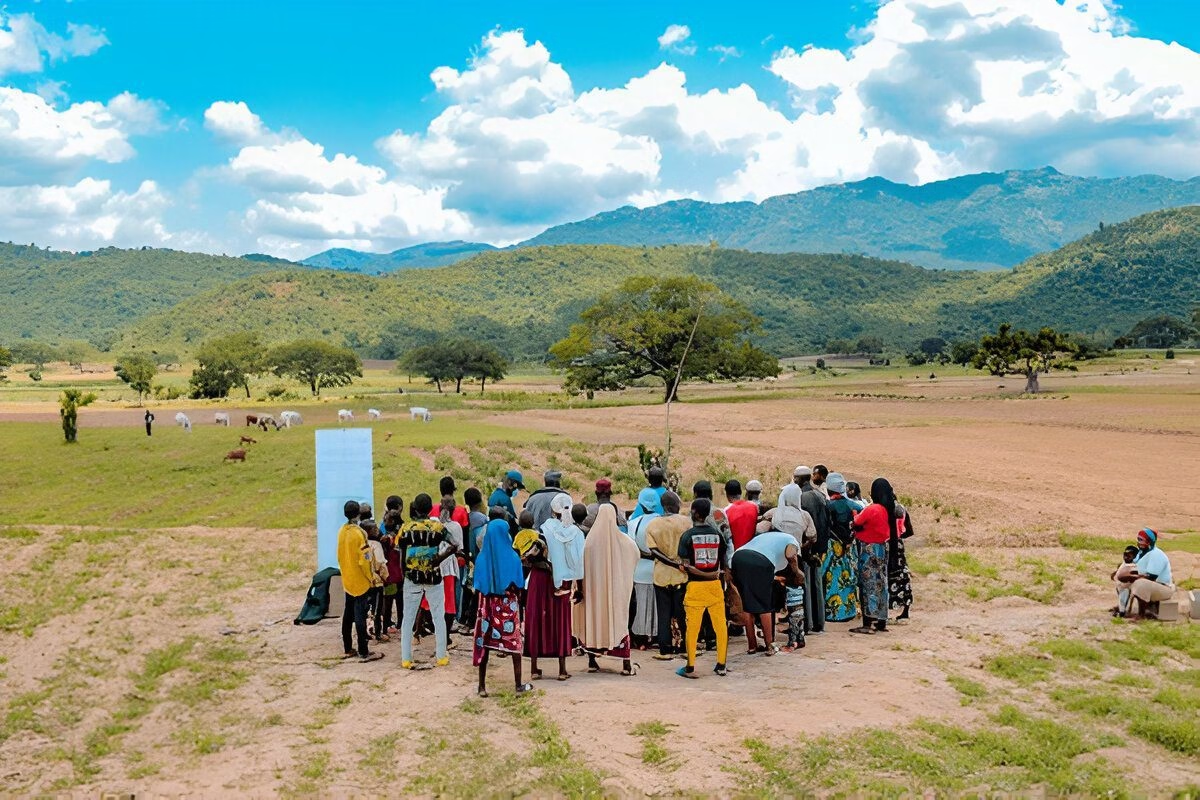
5 Community Development Lessons from Traditional African Societies
I still remember sitting under the great baobab tree in my grandfather's village in Eastern Uganda, listening to the elders resolve a land dispute between two families. What struck me wasn't just their wisdom, but how everyone in the community participated until a solution emerged that left no one behind. This wasn't just a meeting—it was centuries of African community development in practice. Long before modern frameworks like "sustainable development goals" entered our vocabulary, African societies had perfected community building through time-tested systems. At Olodia African Pathways, we've documented these indigenous knowledge systems across 15 African communities, and what we've discovered offers powerful lessons for today's world.
- Olodi African Pathways
- November 19, 2025
1. Collective Responsibility: The Ubuntu Philosophy in Action
I am because we are" – this Ubuntu philosophy from Southern Africa isn't just a beautiful saying. I witnessed its power during a research trip to a Zulu community in KwaZulu-Natal. When a family's homestead burned down, the entire community gathered within hours—some bringing timber, others food, and everyone contributing labor. Within three days, a new home stood where ashes had been.
This profound sense of collective responsibility meant that:
- No child was considered an orphan—the community raised them together
- Success was celebrated collectively, and challenges faced unitedly
- The wellbeing of one was the concern of all
Modern application: Imagine neighborhoods where residents naturally checked on elderly neighbors, or companies where teams genuinely supported each other's growth.
2. Strong Eldership & Mentorship Systems
In Western thinking, we often associate leadership with youth and innovation. But in traditional African societies, elders were the living libraries of community wisdom. During my work with the Maasai in Kenya, I observed how elder councils—the Laibons—made decisions that considered seven generations ahead.
The system worked because:
- Knowledge transfer happened through daily interactions, not just formal training
- Elders mediated conflicts using historical precedents and cultural values
- Young people learned through apprenticeship and storytelling
I recall a skilled Ashanti craftswoman in Ghana who had trained 23 young apprentices in traditional kente weaving—ensuring the art form would outlive her.
3. Cooperative Labor: The Original Community Investment
The Kenyan "Harambee" tradition—meaning "all pull together"—demonstrates how African communities turned work into social bonding. I participated in a community farming day in western Tanzania where over 100 people gathered to plant a neighbor's field. By afternoon, what would have taken the family weeks was complete, followed by singing, dancing, and shared meals.
These cooperative systems:
- Transformed individual tasks into community celebrations
- Built interdependence and mutual respect
- Ensured no one struggled alone with overwhelming work
4. Inclusive Decision-Making: Where Every Voice Mattered
Contrary to popular belief, many traditional African societies practiced deeply inclusive governance. Among the Igbo of Nigeria, the concept of "Igwe bu ike" (the people are strength) meant decisions required broad consensus.
I observed a village meeting in Burkina Faso where:
- Discussions continued until everyone felt heard
- The goal wasn't majority rule but finding solutions acceptable to all
- Women, youth, and elders all had designated speaking times
This process, though sometimes slower, built unprecedented buy-in and social cohesion.
5. Shared Wealth & Resource Distribution
In modern economics, we measure success by individual accumulation. Traditional African societies measured it by community wellbeing. The Swahili concept of "ujamaa" (familyhood) guided resource sharing that ensured collective survival.
Through our research, we documented systems where:
- Harvest surpluses were stored in community granaries for lean seasons
- Livestock distribution systems ensured no family went without
- Successful community members were expected to support others' advancement
I met a successful entrepreneur in Senegal who saw his wealth as a "community trust" rather than personal property—funding education for countless village children.
Why These Lessons Matter Today
As I write this from our community center in Nairobi, I see these ancient principles coming alive in surprising ways. A youth group using Ubuntu principles to support each other through unemployment. Neighborhoods reviving cooperative childcare. Businesses adopting consensus-based decision making.
These aren't nostalgic traditions—they're practical solutions to modern isolation, inequality, and environmental challenges. The wisdom of African societies reminds us that true development isn't just about infrastructure and economies, but about weaving communities where everyone belongs and contributes.
At Olodia African Pathways, we're committed to keeping this wisdom alive. Through our cultural preservation programs and community workshops, we're helping both African communities and global citizens rediscover these time-tested principles of togetherness.
Want to dive deeper into African community wisdom? Explore our cultural archives or join our upcoming webinar on "Indigenous Solutions to Modern Challenges."
FAQ'S
Dress in clothes with a subdued color scheme, bring a camera, sunscreen, and insect repellent.
Optimum for wildlife observation: during the dry season (June to October).
Check for licensures and positive feedback, then compare packages.
You can see the Big Five, giraffes, and over 2,000 species of birds.
Yes, but remember to follow your guide and stay inside your car during a game drive.