- Arusha, United Republic of Tanzania
- info@olodiafricanpathways.com
- +255 787 052 187
Olodi African Pathways Photography

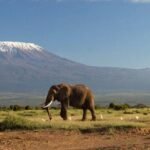
Kilimanjaro
Why Climb Mount Kilimanjaro?
Climbing Kilimanjaro is the adventure of a lifetime. People from all over the world put this peak on their bucket lists. At 5,895 metres, it stands as Africa’s highest point. It is also the tallest free-standing mountain on the planet.Some paths offer a challenging climb, but you do not need to be a professional. A beginner can reach the summit safely with a solid guide by their side. Our team at Olodi African Pathways ensures your safety at every step.
Mount Kilimanjaro
Mount Kilimanjaro stands as a dormant volcano in Tanzania. Three separate volcanic cones—Kibo, Mawenzi, and Shira—form this massive peak. It reaches 5,895 metres above sea level. This makes it Africa’s highest point and the tallest free-standing mountain on Earth.
The peak holds the title of the highest volcano in the Eastern Hemisphere. Kilimanjaro National Park protects this giant, attracting climbers from every corner of the globe. However, its famous glaciers shrink every year. Scientists worry these ice caps might disappear by 2035. Therefore, visiting the mountain now feels more important than ever.
Location Of Mount Kilimanjaro National Park
Kilimanjaro National Park sits in Tanzania. It lies south of the Kenyan border and near Arusha. If you stay in Arusha town, you can see the peak from your balcony. The park covers 1,688 square kilometres.
How to Reach the Park
Mount Kilimanjaro is the main attraction. You can choose from several routes to reach the summit. Each path offers a unique challenge. Getting there is easy. You can drive to the gate or fly into Kilimanjaro International Airport.
Routes for Hiking Mount Kilimanjaro
Mount Kilimanjaro hiking is easier in a way that the trekkers/hikers are able to access different hiking trails which are categorized in the ease of hiking. There are 6 routes that are fully approved for hiking the tallest mountain in Africa to be able to reach Uhuru Peak. The routes where hiking can be done include; the Lemosho Route which is a 70-kilometre trail that passes through the Londorossi Gate. This route is among the best routes for clients since it has registered high successes to the peak. Another route is the Umbwe Route which is regarded as among the hardest routes. Success in this route is hard because of the short acclimatization time. We also have the Shira Route which approaches the mountain from the west close to the Lemosho Route. This route is used by a few hikers since it was replaced by an easier route i.e. the Lemosho Route. The Rongai Route is also one of the Kilimanjaro hiking routes and is also among the hardest routes to hike since there is a short time for acclimatization. There is also the Marangu Route commonly known as the “Coca Cola” route and is the oldest route to use while hiking Mount Kilimanjaro. It is one of the cheap options for hiking and it also has a permanent dormitory of sleeping huts for the hikers. Finally, we have the Machame route which is the longest route to hike the mountain. It is long but considered a better option by hikers because it has better acclimatization time. It is also known as the “Whiskey Route“. With all these given routes, be sure to prepare yourself by doing some drills for hiking, and also remember to look out for some facts about hiking Mount Kilimanjaro.
Best Time to Visit Mount Kilimanjaro
Mount Kilimanjaro is located near the Equator and therefore, the areas around the mountain receive Dry Seasons and wet seasons. Hiking Mount Kilimanjaro is quite dangerous when the weather is messy for example during the wet seasons, it is dangerous because of the slippery trails, snow, mud and other weather disasters which might be of harm to the body. Therefore, this leaves the Dry season being the best time to hike Mount Kilimanjaro. The dry months which are favourable for hiking are the months of December to March and those of late June through to September. Therefore, be sure to book your Mount Kilimanjaro Hiking Safari during these months.
Wildlife Species in Mount Kilimanjaro National Park
This being a national park, it harbours quite a number of wildlife species that may be eye-catching to the traveller who is on a safari across the Kilimanjaro Plains and may be planning to hike the great mountain. Some of the wildlife species include the cape Buffaloes which leave in the mountain forest that surrounds the National Park. Another of the most eye-catching species is the African Elephants which are seen in big herds traversing the lands between Namwai and Tarankia rivers. In the montane forest, you will be able to find primate species like the blue monkeys, western black and white colobuses, bush babies, and other species like leopards, giraffes, bats, and antelopes among others. It is quite an amazing experience for those who are planning to hike to be able to view different kinds of wildlife species as traverse Mount Kilimanjaro National Park.
Kilimanjaro’s Weather & Climate
The areas around Mount Kilimanjaro stay warm all year. In the rainforests, temperatures usually range between 21°C and 27°C. Since the park sits near the equator, these numbers rarely change. However, as you climb higher, the weather shifts quickly.
The air gets much colder as you reach the top. At the summit, the environment feels like the Arctic. Night temperatures can drop to -29°C. Because of these extremes, the mountain features several different climate zones.
Best Seasons for Trekking
Timing is key for a successful trek. Here is what you can expect:
- Wet Seasons: March to May and November to December bring the most rain.
- Dry Seasons: June to October offer clear skies and very little rainfall.
Even in the dry months, some moisture remains due to the park’s unique location.
Humidity and Wind Patterns
The air around Kilimanjaro stays humid, often between 57% and 77%. High moisture creates a thick, mystical fog in the rainforests. This is most common during the spring and summer months.
Trade winds also influence the daily weather. Northeastern winds dominate from May to October. Then, southeastern winds take over from November to March. These patterns create the rain and dry spells you experience during your climb.
History of Kilimanjaro National Park
Mount Kilimanjaro has a long history in Tanzania. For centuries, Arab and Chinese traders used the mountain as a landmark. They often described it as a “snow island in the sky.” Interestingly, the mountain first appeared in the 1st-century writings of Ptolemy.
He was a famous Graeco-Roman historian and mathematician. However, Chinese scholars only mentioned the peak about seven centuries ago. Locals knew the mountain well, but the rest of the world took much longer to discover its beauty.
The First Climbers and Colonial Era
In 1849, a missionary named Johann Rebmann published a story about the mountain. At first, many people disbelieved his claims of snow near the equator. By 1885, the German Protectorate of Kilimanjaro began.
Later, in 1889, Hans Meyer and Ludwig Purtscheller became the first to reach the summit. At that time, people called it “Germany’s highest peak.” After World War I, the British took over the area as a Protectorate. This lasted until Tanzania finally gained its independence in 1961.
Becoming a UNESCO World Heritage Site
The push for conservation started early. Kilimanjaro became a forest reserve in 1921. Later, in 1973, the government declared the mountain and its forest corridors a National Park. This move helped safeguard its unique ecosystem for future generations.
In 1987, the park earned its spot as a UNESCO World Heritage site. By 2005, the park expanded again. It now includes the entire tropical forest. Today, rare species like the blue monkey live in these protected woods. The indigenous Chagga people also continue to farm the lower hills.
The Future of the Shining Mountain
The name Kilimanjaro has deep roots. Most linguists believe it combines the Swahili word “Kilima” (mountain) and the Chagga word “Njaro” (whiteness). Together, they mean the “Shining Mountain.”
Today, the Tanzanian government works with international bodies to preserve this icon. However, the famous glaciers face a serious threat. Some researchers at National Geographic predict the ice could disappear by 2030. Others believe it might last until 2060. Seeing these glaciers now is more important than ever.
Formation of Mount Kilimanjaro
Mount Kilimanjaro’s three summits were made millions of years ago by volcanic explosions. Shira, one of the volcanic cones, is now extinct and degraded, while Mawenzi and Kibo, the other two, “melted” together during successive eruptions. With its iconic Uhuru summit at about 6000 meters above sea level, Kibo is now the highest.
Mount Kilimanjaro is made up of three volcanic cones that originated as a result of extensive continental rifting. Volcanic activity is considered to have started some 1 million years ago when molten lava began to burst through fractures in the lithosphere caused by the thinning of the crust. This lava had a low viscosity at first and expanded outward to form a gently sloping foundation. Continued eruptions released heavier, more viscous lava, eventually forming the Shira volcanic cone. The Shira cone fell into a vast caldera (a cauldron-like cavity much bigger than the original volcano) after volcanic activity halted, forming the Shira Ridge. Following eruptions, Kilimanjaro’s two additional main volcanic cones, Mawenzi and the currently inactive Kibo, as well as smaller parasitic cones, were formed.